
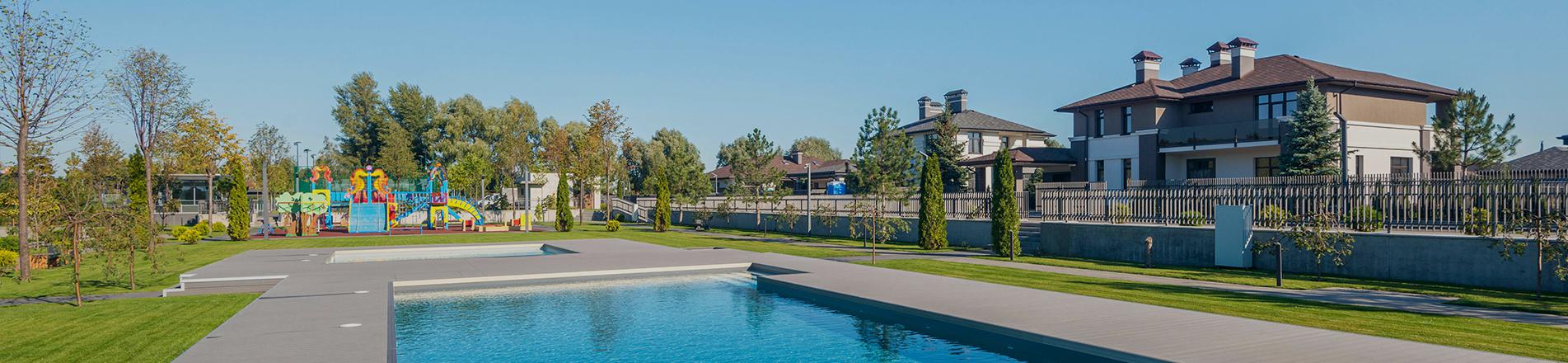
When homeowners and builders select outdoor flooring, the primary consideration is the product's weather resistance—its ability to withstand natural elements. WPC perfectly addresses the drawback of natural wood's lack of waterproofing by combining the aesthetic appeal of natural timber with the durability of engineered materials, making it a mainstream choice. Its waterproof properties are often hailed as a revolutionary breakthrough: unlike traditional wood, high-quality WPC effectively prevents water absorption, avoiding rot, warping, and structural damage. However, as its popularity grows, so do misconceptions—particularly the notions that “waterproof equals maintenance-free” and “all WPC is equally durable.” As a trusted Chinese manufacturer in the wood-plastic composite industry, we are committed to clarifying facts, dispelling myths, and empowering you to make informed choices for your outdoor spaces.
Let's start with the science. WPC is manufactured by blending recycled wood fibers with high-density polyethylene (HDPE) or polypropylene through an extrusion process, forming sturdy boards. During this process, the wood fibers are completely encapsulated by plastic, creating a non-porous surface that effectively blocks water penetration. Rain, snowmelt, or pool splashes form beads on the surface and roll off without absorption. Natural wood can absorb up to 15–20% of its own weight in water, leading to swelling and cracking. In contrast, high-quality WPC decking typically absorbs less than 1%. This isn't merely “water-resistant”—it achieves inherent waterproofing at the structural level.
Despite this clear scientific advantage, misconceptions persist. The first major misconception we must address is the belief that “WPC will eventually absorb water through cut edges or screw holes, leading to internal rot.” This concern stems from experiences with early composite materials or poorly formulated low-quality imitations. However, standard WPC flooring has significantly improved this issue through formulation enhancements. Moreover, high-performance composite flooring developed using advanced co-extrusion technology builds upon standard WPC foundations. Co-extruded WPC decking features a protective polymer cap layer fused around the entire perimeter of the board. Even when cut to fit specific deck dimensions, the material's integrity remains unchanged—water cannot penetrate inward via capillary action as it would in wood. Furthermore, since the boards contain no organic cellulose fibers, there is no environment supporting fungal growth, effectively eliminating the concept of “rot.” If you are not in a humid coastal area or rainy climate, you can choose the relatively inexpensive first-generation WPC flooring. If you are installing decking in a humid coastal area or rainy climate, you may want to prioritize the upgraded second-generation WPC product.
Most people have the notion that since it is waterproof, it is a one-time solution, and once installed, it requires no time or effort for maintenance. This is a serious misconception—that “waterproof equals zero maintenance.” While WPC requires far less upkeep than traditional wood—eliminating the need for annual painting, staining, or sanding—it still demands regular inspection and simple cleaning. Even though the material doesn't absorb water, it remains susceptible to surface wear, stains, or environmental buildup. For instance, outdoor settings inevitably accumulate fallen leaves, dust, and organic debris on surfaces, particularly in shaded or less-trafficked areas. If left uncleaned for extended periods, accumulated leaves and organic debris can foster mold growth or cause fading. While WPC decking won't rot like wood, neglecting basic cleaning will still impact its appearance and lifespan. Waterproofing only protects the internal structure; surface maintenance remains crucial for preserving the deck's original look and slip resistance. We recommend sweeping debris weekly and washing the surface with a mild cleaner every few months. In rainy regions or areas near trees, more frequent maintenance may be necessary. While neglecting these basic steps won't directly cause structural damage, it can lead to stubborn stains, algae buildup, accelerated material erosion and aging. Accumulation of organic matter and growth of surrounding vines or creepers may clog the hollow structure of the boards and the drainage gaps between WPC decking planks, further accelerating erosion and aging.
In summary, while WPC decking offers exceptional water resistance, it is not a “set-and-forget” solution. Waterproofing does not equate to maintenance-free. Our products reduce your upkeep costs compared to natural wood, delivering low-maintenance flooring. To maximize your outdoor space, treat your decking like any other high-value investment—nurture it regularly. At ForestFide, we are dedicated to producing durable outdoor flooring that balances performance, aesthetics, and practicality. Discover our range of premium WPC solutions, built to withstand nature's challenges without compromising on easy maintenance. Not just a product, but a lifestyle.

As a composites manufacturer, we are good at listening to people's suggestions and try to combine their ideas with reality as a way of lifestyle.


 IPv6 network supported