Which is Better for Your Outdoor Project: PVC or WPC?
Mar 11, 2026
When planning new deck, fence, or siding projects, homeowners and contractors often face a critical choice: opt for traditional PVC (polyvinyl chloride) or the increasingly popular wood-plastic composite (WPC)? Both materials promise durability and low maintenance, yet they differ fundamentally in composition, performance, and aesthetic appeal. Demand for sustainable building materials with a natural feel has reached unprecedented heights. I'll delve into the science and practicality of both materials to help you make an informed decision for your outdoor living space.
When it comes to PVC and WPC, the most fundamental difference lies in their material composition: one is a synthetic polymer, the other a composite material. Each possesses distinct advantages and characteristics, which is precisely why they were developed and adopted. To determine which material is superior and better suited for our specific applications, we must first understand their composition. PVC is a 100% synthetic plastic polymer. Its advantages include exceptional water resistance and low production costs. However, because it contains no organic components, its surface often appears overly glossy, frequently conveying a distinct “plastic feel.” It cannot replicate the complex, textured grain or the warm tactile quality of real wood. On the other hand, WPC is a composite material blending wood fibers (or bamboo powder) with plastic and binders. This unique combination allows outdoor WPC flooring to combine the best of both worlds: it possesses the structural stability and moisture resistance of plastic while also featuring the natural grain, patterns, and matte finish of solid wood. For projects prioritizing aesthetics and a natural feel, WPC offers exceptional visual depth that pure PVC simply cannot replicate.
In outdoor applications, heat resistance is a critical factor, making heat-resistant flooring particularly important. One of the most significant technical limitations of pure PVC is its high thermal expansion coefficient. During hot summers, when direct sunlight causes surface temperatures to soar, PVC panels undergo significant linear expansion. This physical characteristic often leads to severe engineering issues: expansion continues even after filling the gaps originally left between panels, causing the entire surface to warp, buckle, or develop immense stress at joints. This can result in loose fasteners or panel fractures. At night, when temperatures plummet, material contraction may leave unsightly wide gaps. These not only detract from aesthetics but also pose tripping hazards for pedestrians. In contrast, WPC demonstrates exceptional dimensional stability. WPC is not pure plastic but a composite of rigid wood fibers (or bamboo powder) and a plastic matrix. These natural fibers act as a skeletal framework, similar to the “reinforcing bars” in reinforced concrete, significantly restricting the thermal movement of the plastic matrix. Consequently, even under extreme day-night temperature fluctuations, high-quality co-extruded WPC decking maintains structural flatness and stability. It effectively resists warping, sagging, and deformation, ensuring your patio remains as level as the day it was installed for years to come.
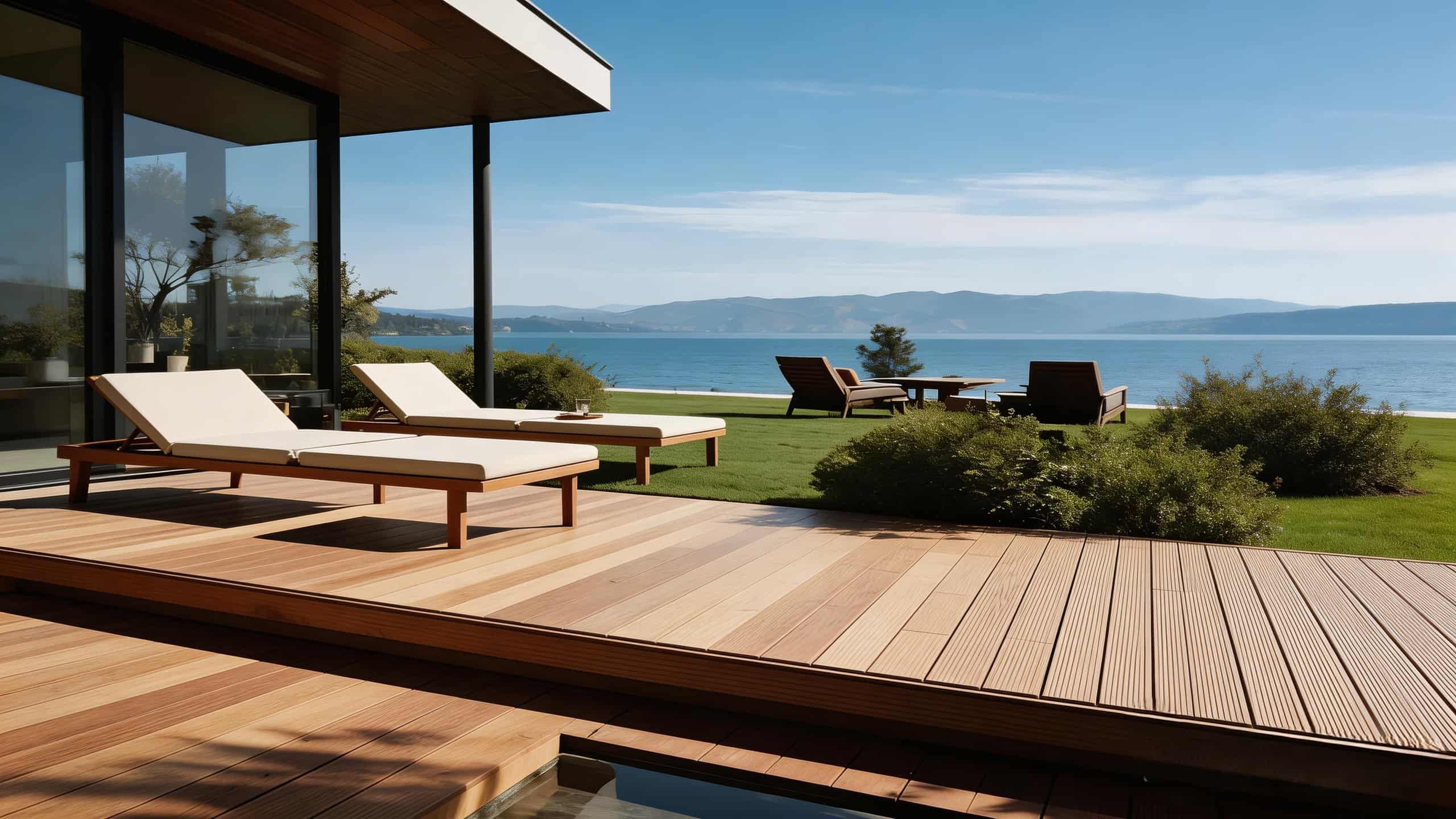
Additionally, safety around pools and decks is a major concern. Pure PVC surfaces are typically smooth and non-porous. When wet (from rain or pool splashes), their surface friction coefficient plummets, becoming dangerously slippery and prone to causing slips. Moreover, PVC possesses low specific heat capacity and unique thermal conductivity. Under intense sunlight, it rapidly absorbs heat, with surface temperatures easily exceeding 60°C-70°C (140°F-154°F). This causes a burning sensation when walked on barefoot, significantly compromising outdoor comfort and potentially causing burns to pets' paws. In contrast, premium WPC products—especially co-extruded profiles—feature a specially designed embossed woodgrain texture on their surface. This microstructure significantly increases surface roughness, delivering exceptional slip resistance (even when wet) while reducing actual contact area between the foot and material, aiding heat dissipation. More importantly, the presence of wood fibers makes WPC's thermal conductivity closer to natural wood. It heats up more slowly under sunlight, offering a cool and pleasant touch. This creates a genuinely safe and comfortable barefoot environment for family members and pets.
Beyond temperature and moisture, ultraviolet (UV) radiation is an invisible threat to outdoor materials. Prolonged sun exposure allows high-energy UV rays to break material chemical bonds, making UV-resistant flooring a wise choice. While PVC inherently possesses some weather resistance, its molecular chains remain susceptible to degradation under sustained UV exposure. This leads to two primary consequences: first, fading or discoloration, where vibrant colors gradually lighten or yellow; second, chalking, where the material surface loses luster, forming a white powdery substance that feels rough to the touch. The material also becomes increasingly brittle, with significantly reduced impact resistance. To mitigate this issue, PVC typically requires substantial stabilizer additives, which increase costs and diminish in effectiveness over time. Now consider WPC. Modern high-quality WPC, especially co-extruded WPC flooring, incorporates a polymer protective shell during manufacturing. This shell contains high concentrations of UV inhibitors and pigments, effectively acting as an “armor” that blocks UV penetration into the core layer. Pigments are locked deep within the protective layer, resisting UV degradation. Consequently, WPC maintains vibrant colors long-term, with colorfastness far surpassing standard PVC. This layer prevents photo-oxidation of the base material, avoiding surface chalking and brittleness. Even after years of sun exposure, WPC retains structural integrity and aesthetic appeal—eliminating the need for periodic repainting like wood and avoiding PVC's risk of later brittleness.
So, which is better? If you need a temporary, low-budget solution for damp indoor areas, PVC might suffice. However, for any outdoor application—be it a spacious backyard deck, pool surround, or privacy fence—WPC is the clear winner. It bridges the gap between plastic's artificial feel and natural wood's high maintenance demands. As technology advances, wood-plastic composites will continue to widen their performance lead.
Choosing WPC means selecting a material that respects the environment and withstands the elements, bringing the timeless beauty of wood into your home without the hassle of upkeep. Ready to elevate your outdoor space? Explore our premium WPC product line today and experience the difference quality makes.
Read More






 IPv6 network supported