other

Co-extruded WPC flooring

Home

Co-extruded WPC flooring

  • Unmasking the Low-Price Trap: Why Do WPC Boards That Are $2 Cheaper Per Square Meter End Up Costing Contractors an Extra $20 in Post-Sales Expenses?
    Unmasking the Low-Price Trap: Why Do WPC Boards That Are $2 Cheaper Per Square Meter End Up Costing Contractors an Extra $20 in Post-Sales Expenses?
    Apr 21, 2026
    In the outdoor building materials market, particularly in the WPC sector, price wars seem never-ending. When reviewing quotes, many contractors and property owners are often drawn to options that are $2 or more cheaper per square meter. After all, on a large-scale project, saving $2 per square meter translates to thousands of dollars in direct cost savings. However, as a WPC manufacturer with years of industry experience, we must reveal a harsh truth: this seemingly attractive “cost-saving” option is often a carefully packaged financial trap that can ultimately cost contractors as much as $20 per square meter—or even more—in after-sales repairs, damaged brand reputation, and lost customers. The Tip of the Iceberg of Hidden Costs: Fatal Differences in Material Performance The reason cheap WPC flooring can keep prices low is usually due to cutbacks in core raw materials and production processes. High-quality WPC flooring uses a high proportion of virgin plastic and finely ground wood flour, supplemented with sufficient amounts of UV stabilizers, antioxidants, and coupling agents. In contrast, low-cost products often rely heavily on recycled plastic, feature poorly processed wood flour, and contain severely inadequate amounts of additives. These differences are hard to detect in the short term, but they quickly become apparent in harsh outdoor environments. The molecular chains in recycled plastic have already broken down, resulting in extremely poor weather resistance; insufficient UV stabilizers cannot block the erosion caused by sunlight. The result is that within just one or two quarters after installation, the flooring surface begins to fade, chalk, and even suffer severe warping and cracking. For contractors, this means having to frequently respond to customer complaints during the warranty period following project delivery, arranging for workers to replace or repair the flooring. These hidden costs—including labor, transportation, new material expenses, and lost productivity due to downtime—far exceed the small savings realized during the initial purchase. Structural Stability and the Critical Role of Co-Extrusion Technology Another cost area often sacrificed is the surface treatment process. Co-extruded WPC flooring, widely adopted in the high-end market, uses co-extrusion technology to form a high-density, highly wear-resistant protective layer on the board’s surface. This “armor” not only gives the flooring a realistic wood grain texture but, more importantly, provides exceptional slip resistance, stain resistance, scratch resistance, and mold resistance. In contrast, low-cost products typically rely on simple single-layer extrusion or use extremely thin, low-quality coating layers. Such flooring is highly prone to absorbing moisture and swelling in humid environments, leading to loose interlocking joints and warped planks. When exposed to oil or fruit juice spills, stains penetrate the substrate and become impossible to remove. Even under normal foot traffic, the surface texture wears away rapidly, exposing an unsightly plastic base color. When homeowners discover that their newly installed deck has become patchy and slippery, the first person they turn to is the contractor. The cost of addressing these large-scale rework issues caused by structural defects in the material is often more than ten times the initial price difference. Furthermore, if structural safety hazards arise—such as floor panels breaking and causing injuries—the legal liability risks faced by the contractor are incalculable. The Trade-off Between Long-Term Value and Brand Reputation For contractors, business is not merely about completing individual projects; it is a process of building a reputation and fostering long-term client relationships. Choosing low-quality composite decking might help you win a bid in the short term, but the poor final result will completely ruin your reputation. In today’s world of highly developed social media and online reviews, a single negative review stating that “the deck warped and faded within six months” is enough to cost you dozens of potential high-end clients in the future. Conversely, while the initial investment in high-quality WPC products may be slightly higher, they ensure that projects will remain as good as new five or even ten years down the line. Satisfied customers become your best advocates, bringing you a steady stream of referral business. True cost control isn’t about how low the purchase price is, but rather the total cost of ownership (TCO) over the product’s entire lifecycle.   High-quality WPC decking is virtually maintenance-free, requiring no regular sanding, staining, or preservative treatments. This not only saves end-users long-term maintenance costs but also fundamentally eliminates post-installation headaches for contractors. As a professional WPC manufacturer, we deeply understand the trust placed in every plank of decking. We offer more than just building materials; we provide a rigorously tested outdoor space solution capable of withstanding extreme climates. We encourage contractors and property owners to look beyond the surface of the price and focus on product density, bending strength, color consistency, and warranty terms. Do not risk losing $20 in after-sales costs—or even damaging your reputation—for the sake of a meager $2 per square meter profit. Choosing high quality WPC products is the responsible choice for your project and your clients, and it is the wisest investment for the long-term growth of your business.
    Read More
  • Today’s Shipping Log: How Was a 40-Foot Container Filled with WPC Flooring in Just 2 Hours?
    Today’s Shipping Log: How Was a 40-Foot Container Filled with WPC Flooring in Just 2 Hours?
    Mar 19, 2026
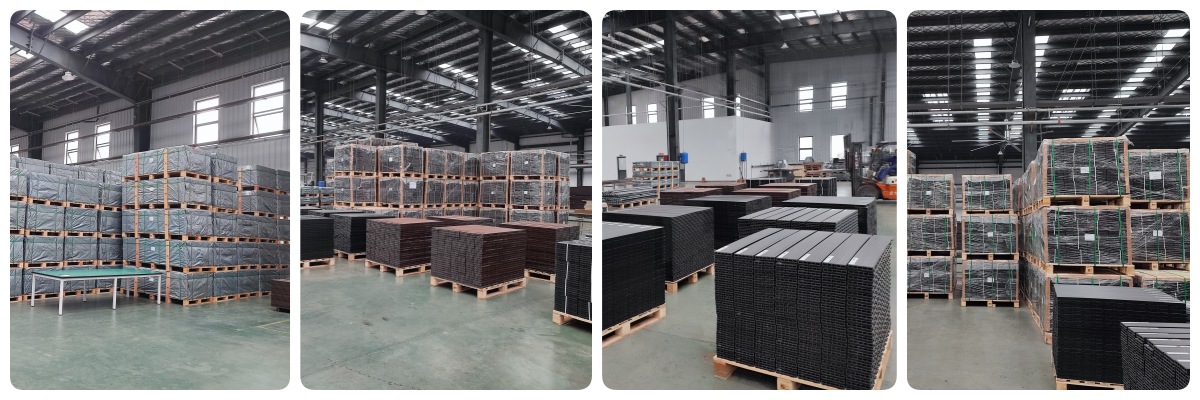
    In B2B building materials trade, delivery times and logistics efficiency are often among the top concerns for buyers. Once an order worth hundreds of thousands of dollars is confirmed, what customers want to know most isn’t how good the product is, but “When will I receive it?” Today, through a real-life shipping log, we’ll take you inside our warehousing and logistics center to reveal how a 40-foot container is efficiently and systematically loaded with outdoor WPC flooring in just two hours, giving you a deeper understanding of our delivery capabilities. The Standardized Process Behind Efficient Container Loading At 8:00 a.m., our container loading team arrives at the warehouse on time. A 40-foot container is docked at the loading platform, its doors open, and the interior is clean and dry, meeting maritime export standards. Loading a container is not simply a matter of “moving goods inside,” but rather a standardized process refined over many years. First, warehouse staff verify product models, colors, and quantities against the shipping list to ensure they match the order exactly. Next, forklift operators transport palletized co-extruded WPC flooring to the loading bay in the predetermined sequence. Our loading team consists of five experienced workers, each with a clearly defined role: two operate forklifts, two stack the cargo inside the container, and one handles documentation and photography. This collaborative division of labor ensures a smooth and accurate loading process. Within two hours, all WPC flooring and accessories are neatly stacked into the container, achieving a space utilization rate of over 95%. This maximizes the volume per shipment while leaving sufficient space for securing the cargo. Packaging Standards: Damage Prevention Is the Core Consideration For cross-border sea freight, the standardization of packaging directly determines whether the goods will arrive at their destination intact. Although WPC flooring possesses excellent physical properties, it remains vulnerable to risks such as moisture, compression, and impact during the weeks-long sea voyage. Therefore, every pallet of waterproof WPC flooring is wrapped in multi-layered protective packaging: the inner layer consists of shock-absorbing plastic film; the middle layer features reinforced corrugated cardboard corner protectors and nylon straps; the outer layer is waterproof plastic film; and the base uses export-grade pallets to provide stable support for the entire load. If customers have special requirements, we can customize packaging according to their specifications. During container loading, we pay special attention to the following points: First, we ensure no gaps between pallets to prevent shifting caused by sea transport vibrations; second, we place anti-slip paper between each layer of cargo to increase friction and prevent sliding; third, any gaps between items are filled with impact-absorbing material to cushion against shocks during transit; finally, the container is reinforced and securely locked before the doors are closed. This packaging and loading standard is the culmination of our years of export experience, keeping the cargo damage rate below 0.5%—far lower than the industry average. Data-Driven Management: Ensuring Traceability for Every Shipment Modern logistics is not merely manual labor; it is the art of data management. At our container loading sites, every step of the process is digitally recorded. Workers meticulously verify and document each pallet of goods, noting the loading location and the operator responsible. Upon completion, detailed packing lists and cargo layout diagrams are generated, allowing customers to clearly identify the exact location of every item within the container. This data-driven management delivers multiple benefits: First, it enhances accuracy by preventing omissions or misloading; second, it facilitates customs clearance by enabling rapid identification of specific goods during inspections; and third, it supports post-sale traceability, allowing precise identification of production batches in the event of quality issues. For buyers, this translates to greater transparency and stronger risk management capabilities. We believe that in today’s increasingly complex supply chains, traceability has become a key indicator of a supplier’s professionalism. Why Shipping Efficiency Is Critical for Buyers Many buyers may view shipping as merely the final step in the order process and therefore unimportant. In reality, however, shipping efficiency directly impacts your project timeline and cash flow. A delayed container shipment can cause construction sites to halt operations while waiting for materials, resulting in additional labor costs and liquidated damages for missed deadlines; a poorly packed container can lead to significant cargo damage, triggering a lengthy claims process. Choosing a WPC flooring manufacturer with efficient shipping capabilities means you can plan your project schedule more accurately, reduce inventory pressure, and accelerate cash flow. Our ability to load containers within two hours is no coincidence; it stems from continuous optimization of our warehousing processes, professional training of our staff, and ongoing investment in equipment and facilities. We understand that every on-time delivery safeguards your project and contributes to our own reputation. Transparent Service: Let You Witness the Entire Shipping Process Remotely To give our overseas clients greater peace of mind, we offer a transparent shipping service. For every container loading, we take photos—including empty container inspections, cargo stacking, securing details, and the sealing process—and send them to the client within 24 hours. This open and transparent approach stems from our confidence in our capabilities. We believe that true partnerships are built on trust and transparency. Whether you need WPC decking for residential patios, commercial plazas, or municipal projects, our professional shipping services ensure your goods arrive safely and on time. The next time you place an order, consider asking your supplier for a shipping log—it’s not only your right but also an effective way to assess their professionalism.
    Read More
  • Which is Better for Your Outdoor Project: PVC or WPC?
    Which is Better for Your Outdoor Project: PVC or WPC?
    Mar 11, 2026
    When planning new deck, fence, or siding projects, homeowners and contractors often face a critical choice: opt for traditional PVC (polyvinyl chloride) or the increasingly popular wood-plastic composite (WPC)? Both materials promise durability and low maintenance, yet they differ fundamentally in composition, performance, and aesthetic appeal. Demand for sustainable building materials with a natural feel has reached unprecedented heights. I'll delve into the science and practicality of both materials to help you make an informed decision for your outdoor living space. When it comes to PVC and WPC, the most fundamental difference lies in their material composition: one is a synthetic polymer, the other a composite material. Each possesses distinct advantages and characteristics, which is precisely why they were developed and adopted. To determine which material is superior and better suited for our specific applications, we must first understand their composition. PVC is a 100% synthetic plastic polymer. Its advantages include exceptional water resistance and low production costs. However, because it contains no organic components, its surface often appears overly glossy, frequently conveying a distinct “plastic feel.” It cannot replicate the complex, textured grain or the warm tactile quality of real wood. On the other hand, WPC is a composite material blending wood fibers (or bamboo powder) with plastic and binders. This unique combination allows outdoor WPC flooring to combine the best of both worlds: it possesses the structural stability and moisture resistance of plastic while also featuring the natural grain, patterns, and matte finish of solid wood. For projects prioritizing aesthetics and a natural feel, WPC offers exceptional visual depth that pure PVC simply cannot replicate. In outdoor applications, heat resistance is a critical factor, making heat-resistant flooring particularly important. One of the most significant technical limitations of pure PVC is its high thermal expansion coefficient. During hot summers, when direct sunlight causes surface temperatures to soar, PVC panels undergo significant linear expansion. This physical characteristic often leads to severe engineering issues: expansion continues even after filling the gaps originally left between panels, causing the entire surface to warp, buckle, or develop immense stress at joints. This can result in loose fasteners or panel fractures. At night, when temperatures plummet, material contraction may leave unsightly wide gaps. These not only detract from aesthetics but also pose tripping hazards for pedestrians. In contrast, WPC demonstrates exceptional dimensional stability. WPC is not pure plastic but a composite of rigid wood fibers (or bamboo powder) and a plastic matrix. These natural fibers act as a skeletal framework, similar to the “reinforcing bars” in reinforced concrete, significantly restricting the thermal movement of the plastic matrix. Consequently, even under extreme day-night temperature fluctuations, high-quality co-extruded WPC decking maintains structural flatness and stability. It effectively resists warping, sagging, and deformation, ensuring your patio remains as level as the day it was installed for years to come. Additionally, safety around pools and decks is a major concern. Pure PVC surfaces are typically smooth and non-porous. When wet (from rain or pool splashes), their surface friction coefficient plummets, becoming dangerously slippery and prone to causing slips. Moreover, PVC possesses low specific heat capacity and unique thermal conductivity. Under intense sunlight, it rapidly absorbs heat, with surface temperatures easily exceeding 60°C-70°C (140°F-154°F). This causes a burning sensation when walked on barefoot, significantly compromising outdoor comfort and potentially causing burns to pets' paws. In contrast, premium WPC products—especially co-extruded profiles—feature a specially designed embossed woodgrain texture on their surface. This microstructure significantly increases surface roughness, delivering exceptional slip resistance (even when wet) while reducing actual contact area between the foot and material, aiding heat dissipation. More importantly, the presence of wood fibers makes WPC's thermal conductivity closer to natural wood. It heats up more slowly under sunlight, offering a cool and pleasant touch. This creates a genuinely safe and comfortable barefoot environment for family members and pets. Beyond temperature and moisture, ultraviolet (UV) radiation is an invisible threat to outdoor materials. Prolonged sun exposure allows high-energy UV rays to break material chemical bonds, making UV-resistant flooring a wise choice. While PVC inherently possesses some weather resistance, its molecular chains remain susceptible to degradation under sustained UV exposure. This leads to two primary consequences: first, fading or discoloration, where vibrant colors gradually lighten or yellow; second, chalking, where the material surface loses luster, forming a white powdery substance that feels rough to the touch. The material also becomes increasingly brittle, with significantly reduced impact resistance. To mitigate this issue, PVC typically requires substantial stabilizer additives, which increase costs and diminish in effectiveness over time. Now consider WPC. Modern high-quality WPC, especially co-extruded WPC flooring, incorporates a polymer protective shell during manufacturing. This shell contains high concentrations of UV inhibitors and pigments, effectively acting as an “armor” that blocks UV penetration into the core layer. Pigments are locked deep within the protective layer, resisting UV degradation. Consequently, WPC maintains vibrant colors long-term, with colorfastness far surpassing standard PVC. This layer prevents photo-oxidation of the base material, avoiding surface chalking and brittleness. Even after years of sun exposure, WPC retains structural integrity and aesthetic appeal—eliminating the need for periodic repainting like wood and avoiding PVC's risk of later brittleness. So, which is better? If you need a temporary, low-budget solution for damp indoor areas, PVC might suffice. However, for any outdoor application—be it a spacious backyard deck, pool surround, or privacy fence—WPC is the clear winner. It bridges the gap between plastic's artificial feel and natural wood's high maintenance demands. As technology advances, wood-plastic composites will continue to widen their performance lead. Choosing WPC means selecting a material that respects the environment and withstands the elements, bringing the timeless beauty of wood into your home without the hassle of upkeep. Ready to elevate your outdoor space? Explore our premium WPC product line today and experience the difference quality makes.  
    Read More

leave a message

leave a message
If you are interested in our products and want to know more details,please leave a message here,we will reply you as soon as we can.
submit

Home

Products

WhatsApp

contact